


A few years ago, I got talking to one of the cleaners working in my house. He’d been a software engineer at startups in Waterloo, and he was retraining for a new career because of how he’d been paid.
“Options are a dirty word,” he told me. Startup staff often take lower salaries in exchange for stock options. Even when the company does well, which it usually doesn’t, using those options means paying cash that people on startup salaries rarely have. Nobody had told him that going in.
That conversation sent me into how each type of equity pay works. When we recently offered equity to someone joining YouGotThis, we chose a structure other than options to better align incentives.
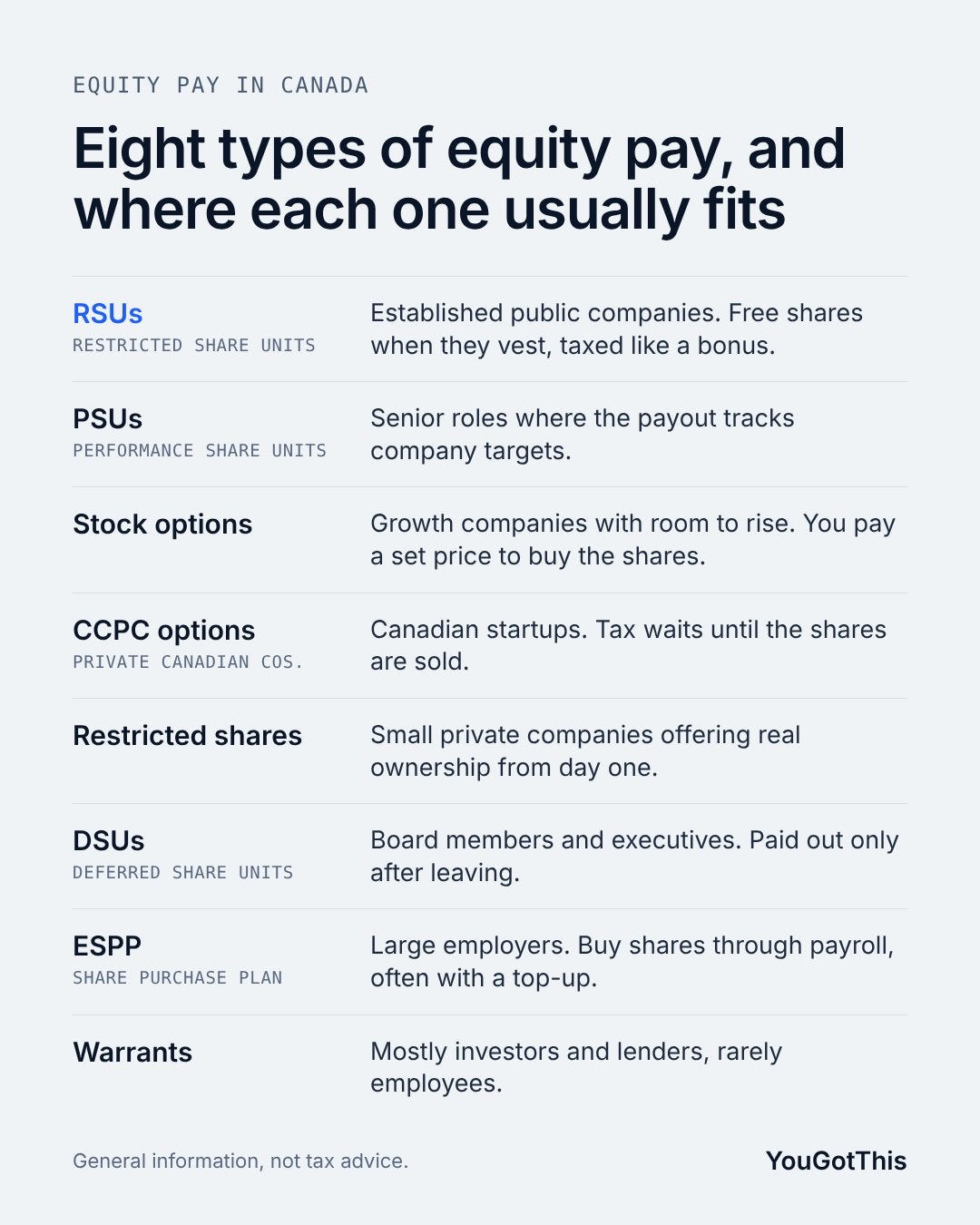
This week’s post is about the type most people at larger companies hold: RSUs, or restricted share units. An RSU is a promise from your employer to give you company shares later, as long as you still work there. The day you’re promised them is the grant. The day they become yours is the vest.
The question people ask most is whether to sell them as soon as they vest. Here’s the part that makes it simpler than it looks:
When RSUs vest, they’re taxed like a cash bonus, whether you keep the shares or sell them. Selling that same day doesn’t add any more tax, because the shares haven’t changed in value yet. Extra tax only comes if the price rises before you sell.
Take someone in Ontario earning $150,000 with $40,000 of RSUs vesting. They pay about $18,200 in income tax on that vest either way.
So the real question isn’t tax. It’s this: if that bonus had been paid in cash, would you use it to buy your employer’s stock? Keep every vest for four years and this person owns about $87,000 of one company, roughly a quarter of their investments if they have $250,000 elsewhere. Their paycheque comes from the same company, so one bad year can hit both.
The full post covers, in plain language:
- what RSUs are and what happens on the day they vest
- the three tax mistakes that come up most, including one that means paying tax twice
- how RSUs compare with stock options, PSUs, DSUs, restricted shares, share purchase plans and warrants, under the Canadian rules
Read the full breakdown → https://yougotthiswealth.com/blog/should-i-sell-my-rsus-canada/?utm_source=substack&utm_medium=email&utm_campaign=blog_should-i-sell-my-rsus-canada